Shallow Recurrent Decoder for Nuclear Reactors Applications (NuSHRED)




This repository collects the codes regarding the application of the Shallow REcurrent Decoder (SHRED) method to Nuclear Reactors systems 🏭⚛️
📄 Related Publications
This repository serves as complementary code to the following papers:
[P1] Riva, S., Introini, C., Cammi, A., & Kutz, J. N. (2025). Robust State Estimation from Partial Out-Core Measurements with Shallow Recurrent Decoder for Nuclear Reactors. Progress in Nuclear Energy, vol. 189, pp. 105928, 2025

[P2] Riva, S., Introini, C., Kutz, J. N. & Cammi, A. (2027). Towards Efficient Parametric State Estimation in Circulating Fuel Reactors with Shallow Recurrent Decoder Networks. Chemical Engineering Science, vol. 339, pp. 125005, 2027

[P3] Riva, S., Missaglia A., Introini, C., Kutz, J. N. & Cammi, A. (2026). From Models To Experiments: Shallow Recurrent Decoder Networks on the DYNASTY Experimental Facility

[P4] Riva, S., Introini, C., Kutz, J. N. & Cammi, A. (2027). Constrained Sensing and Reliable State Estimation with Shallow Recurrent Decoders on a TRIGA Mark II Reactor. Chemical Engineering Science, vol. 338, pp. 125037, 2027

[P5] Riva, S., Introini, C., Kutz, J. N. & Cammi, A., (2026). Multi-Fidelity Learning with Shallow Recurrent Decoders for Multi-Physics Applications.

Upcoming works: two preprints on arxiv have been submitted on the application of SHRED to Fusion MHD systems (code will be released soon).
📊 Simulation Data
The compressed simulation datasets are available on Zenodo:

- [MSFR] Molten Salt Fast Reactor (MSFR) in the accidental scenario Unprotected Loss Of Fuel Flow (ULOFF) - Parametric Transients (includes the single-transient reconstruction case used by P1)
- [DYNASTY] DYNASTY Experimental Facility - Single Transient (Reconstruction & Prediction mode) and Parametric Transients
- [TRIGA] CFD model of TRIGA Mark II Reactor - Single Transient (Reconstruction mode)
- [LRA-neutronics] Neutronics Model using Diffusion and Point Kinetics LRA benchmark reactor
- [RDA] Non-Linear Reaction-Diffusion-Advection of multiple species (High-Fidelity PDE and Low-Fidelity ODE model)
🎥 If you want to know more about the SHRED method for nuclear reactors, check out this YouTube video!
You can use the script
Code/download_datasets.py to download the
datasets (if files argument is not specified,
all datasets will be downloaded):
uv run python Code/download_datasets.py --files MSFR DYNASTYSee Code/README.md for download options and dataset preparation.
To cite the repository or datasets, see CITATION.cff (concept
DOI: 10.5281/zenodo.13789584).
🏗️ Foundations of SHRED
The SHRED method was first proposed and developed in this paper:
- J. Williams, O. Zahn and J. N. Kutz, Sensing with shallow recurrent decoder networks, Proc. R. Soc. A, 2024
📌 The original code base is available here: github.com/Jan-Williams/pyshred.
This repository also builds upon a related implementation:
- Matteo Tomasetto, Jan P. Williams, Francesco Braghin, Andrea Manzoni, J. Nathan Kutz, Reduced Order Modeling with Shallow Recurrent Decoder Networks, Nature Communications, 2025
📌 Improvements for parametric datasets are available here (collaborative between Matteo Tomasetto and Stefano Riva): github.com/MatteoTomasetto/SHRED-ROM
Additionally, the pyforce package is used for sensor placements and EIM/GEIM comparison in P1. See: - Riva et al. (2024) - Cammi et al. (2024)
📂 Repository Structure
📁 shred/ → Modules for the implementation of the SHRED network from github.com/Jan-Williams/pyshred and github.com/MatteoTomasetto/SHRED-ROM
📁 Code/ → Subfolders
P1–P5 with notebooks and
paper-specific utilities. See Code/README.md; each paper folder
has its own README (Code/P1/README.md, …).
Datasets associated as follows:
| MSFR | DYNASTY | TRIGA | LRA-neutronics | RDA | |
|---|---|---|---|---|---|
| P1 | ✅ | ||||
| P2 | ✅ | ||||
| P3 | ✅ | ||||
| P4 | ✅ | ||||
| P5 | ✅ | ✅ | ✅ |
▶️ How to Execute
1️⃣ Clone or download the repository.
2️⃣ Download the datasets with
Code/download_datasets.py (extracted by default
to NuSHRED_Datasets/ at the repo root).
Optionally copy .env.example to
.env and set NUSHRED_DATA_DIR if
you store data elsewhere.
3️⃣ Install the required dependencies, using uv:
Base install (covers P2, P3, P4 and the
Tutorials): bash uv sync
P1 additionally requires pyforce
(v1.0.0, installed directly from GitHub — it is not
published on PyPI) for the sensor-placement (EIM/GEIM)
notebooks: bash uv sync --extra p1
Conda / pip alternative: if you already
use a conda environment, an editable install is equivalent:
bash python -m pip install -e . # base (P2–P5) python -m pip install -e ".[p1]" # + pyforce for P1 EIM/GEIM
If you manage PyTorch via conda (e.g. for CUDA), install it
first, then use pip install -e . --no-deps and
add the remaining dependencies manually to avoid
conflicts.
P5 additionally requires FEniCSx
(dolfinx v0.10.0) and its dependencies (gmsh,
mpi4py, petsc4py,
ufl, basix, pyvista)
only if you want to regenerate the raw data
yourself — dolfinx isn’t available on PyPI, so it must
be installed via a separate conda environment:
bash conda create -n dolf python=3.10 conda activate dolf conda install -c conda-forge fenics-dolfinx=0.10.0 gmsh mpi4py pyvista
If you use the pre-generated data from Zenodo instead,
dolfinx is not needed. See the P5 README for further
details.
4️⃣ Open the notebooks in the relevant
Code/P*/ folder. Each paper directory has its
own README with the recommended execution order.
Two simple tutorials are available in the
Tutorial/ folder for Kolmogorov 2D Flow
(single- and multi-parametric datasets).
📬 Contact Information
For inquiries, please contact: 📧 stefano.riva@autodesk.com, carolina.introini@polimi.it, antonio.cammi@polimi.it, nathan.kutz@autodesk.com.
For issues or bugs, refer to the GitHub Issues section of this repository.
📊 Results
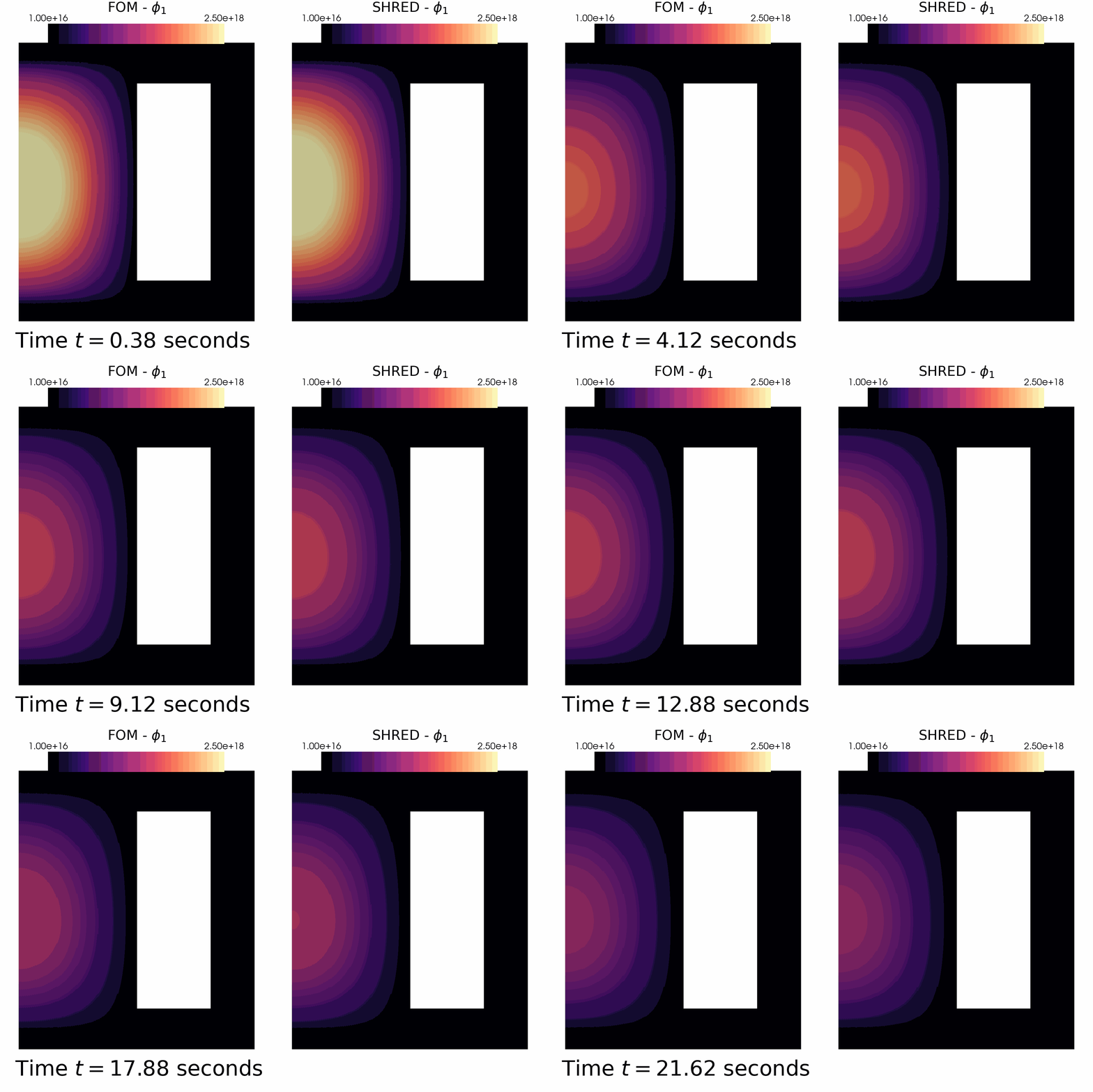
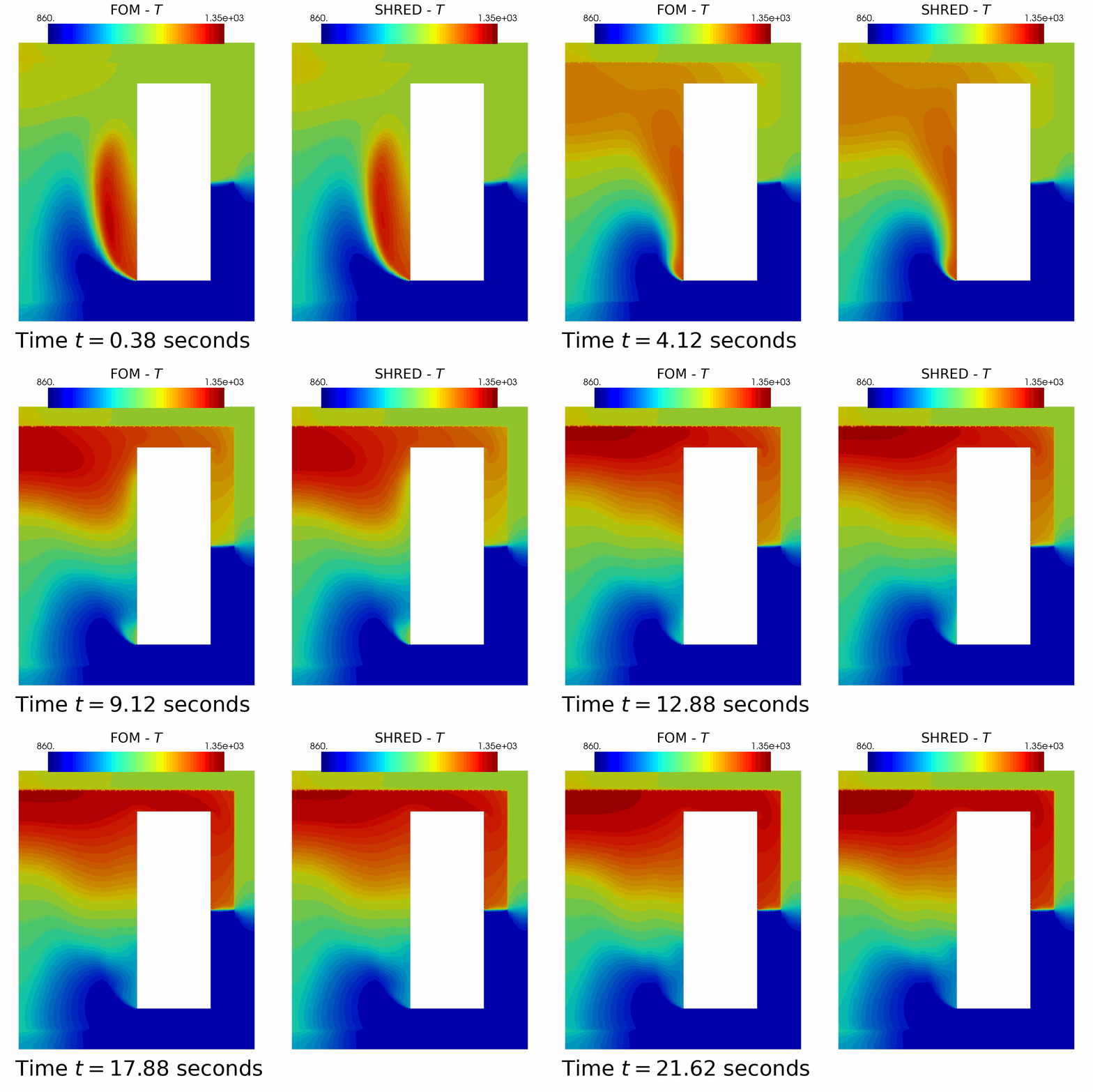
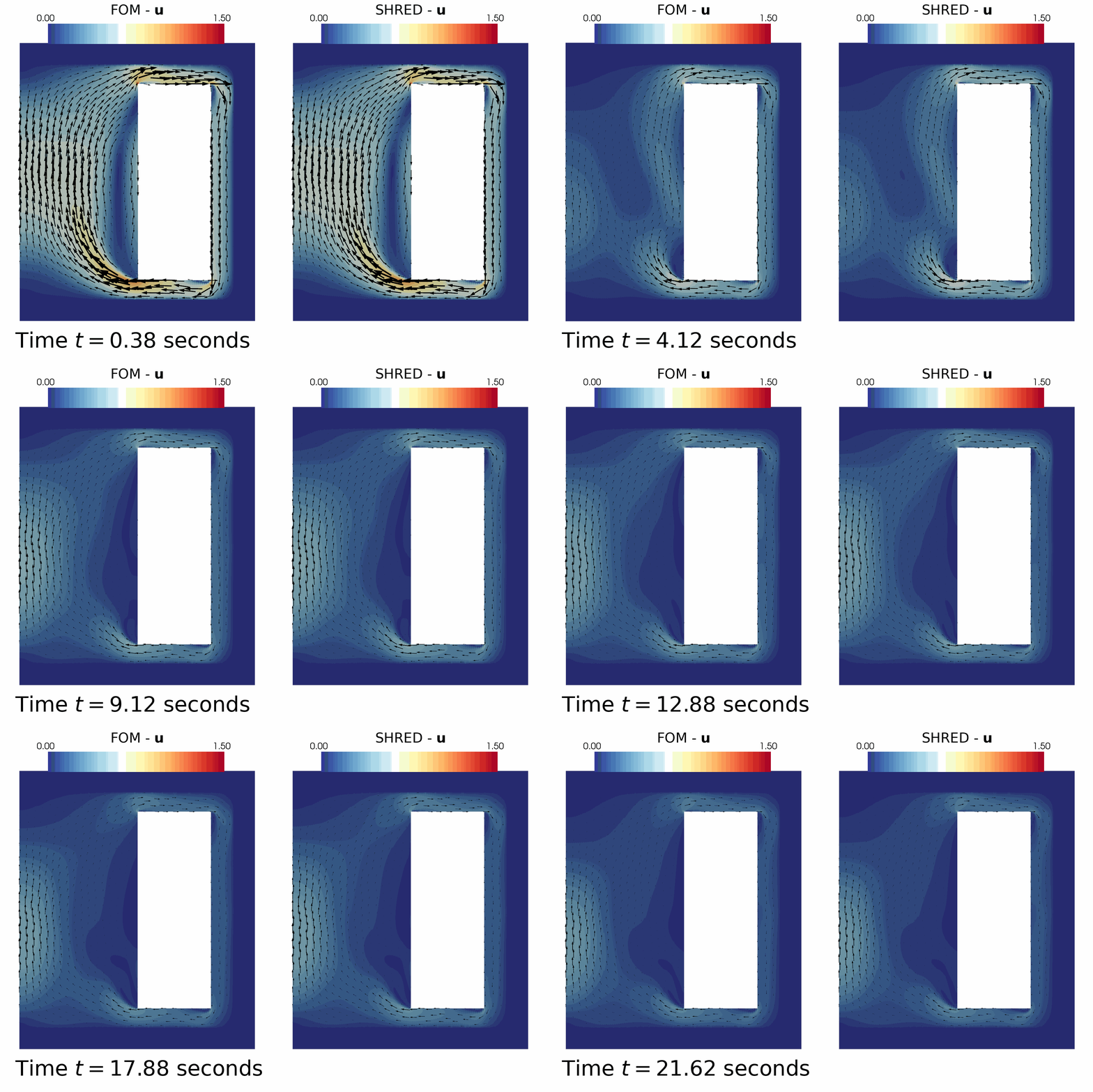
📌 Paper 1
| Fast Flux ϕ1 | Temperature T | Velocity u |
|---|---|---|
 |
 |
 |
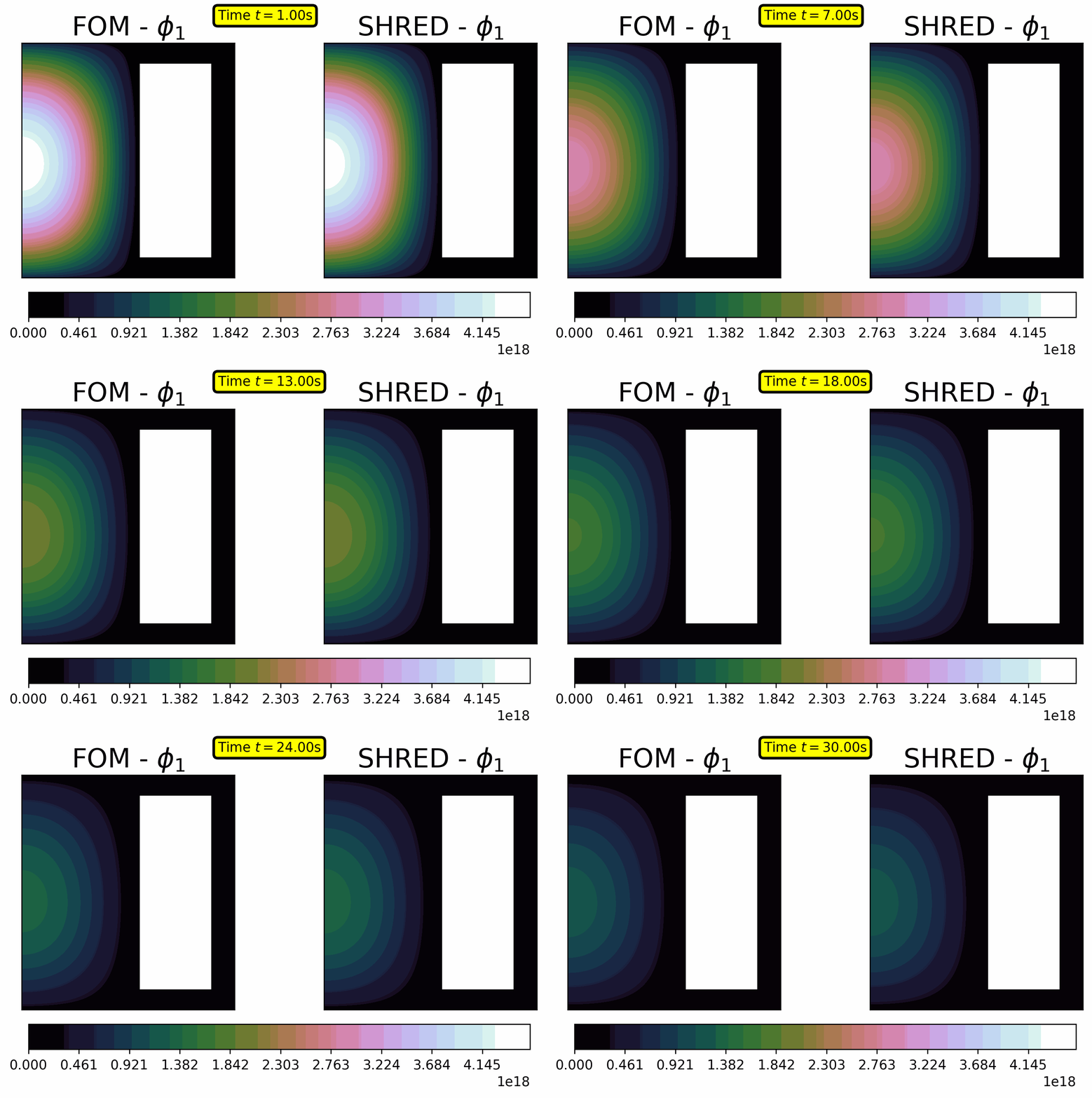
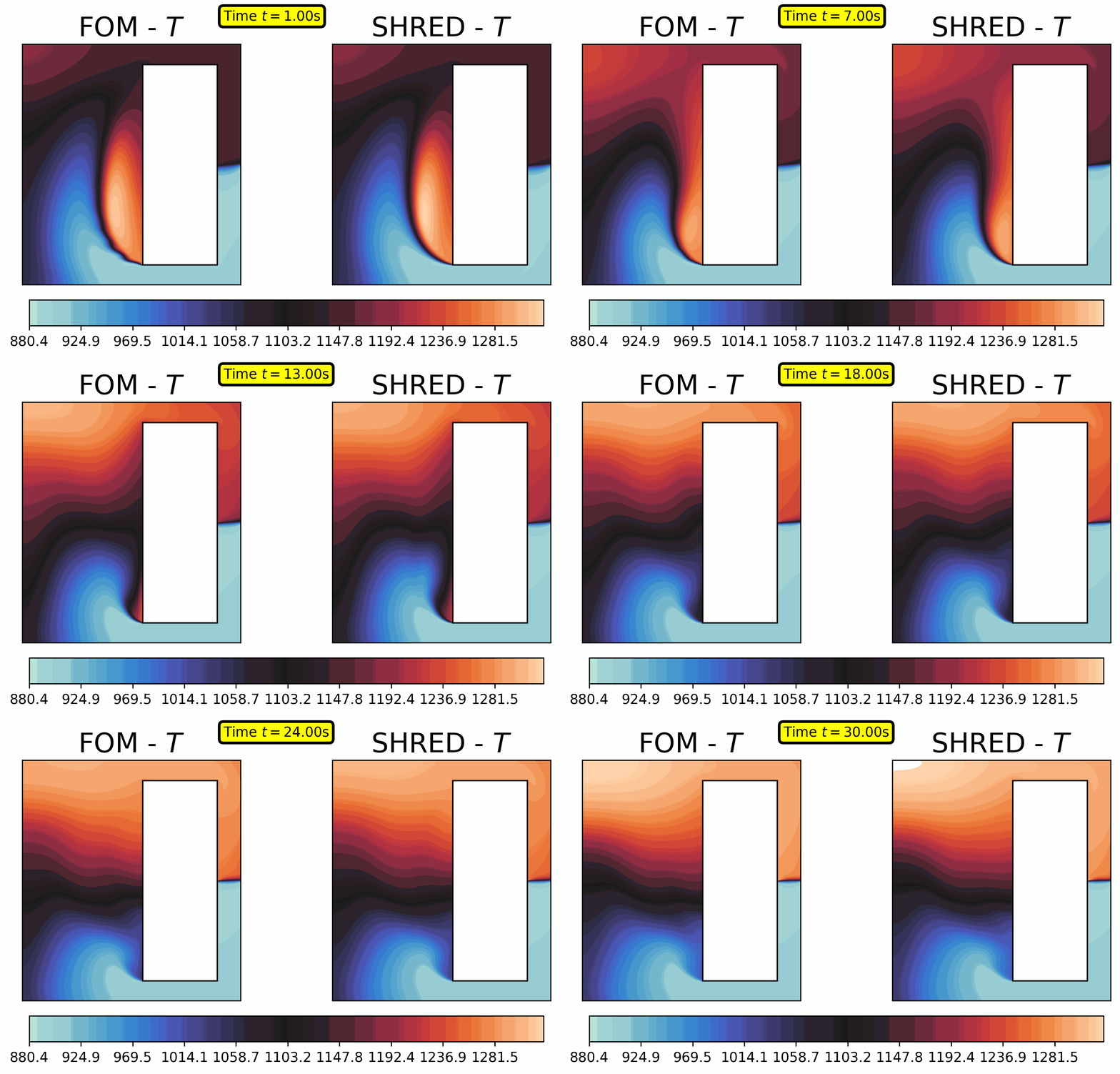
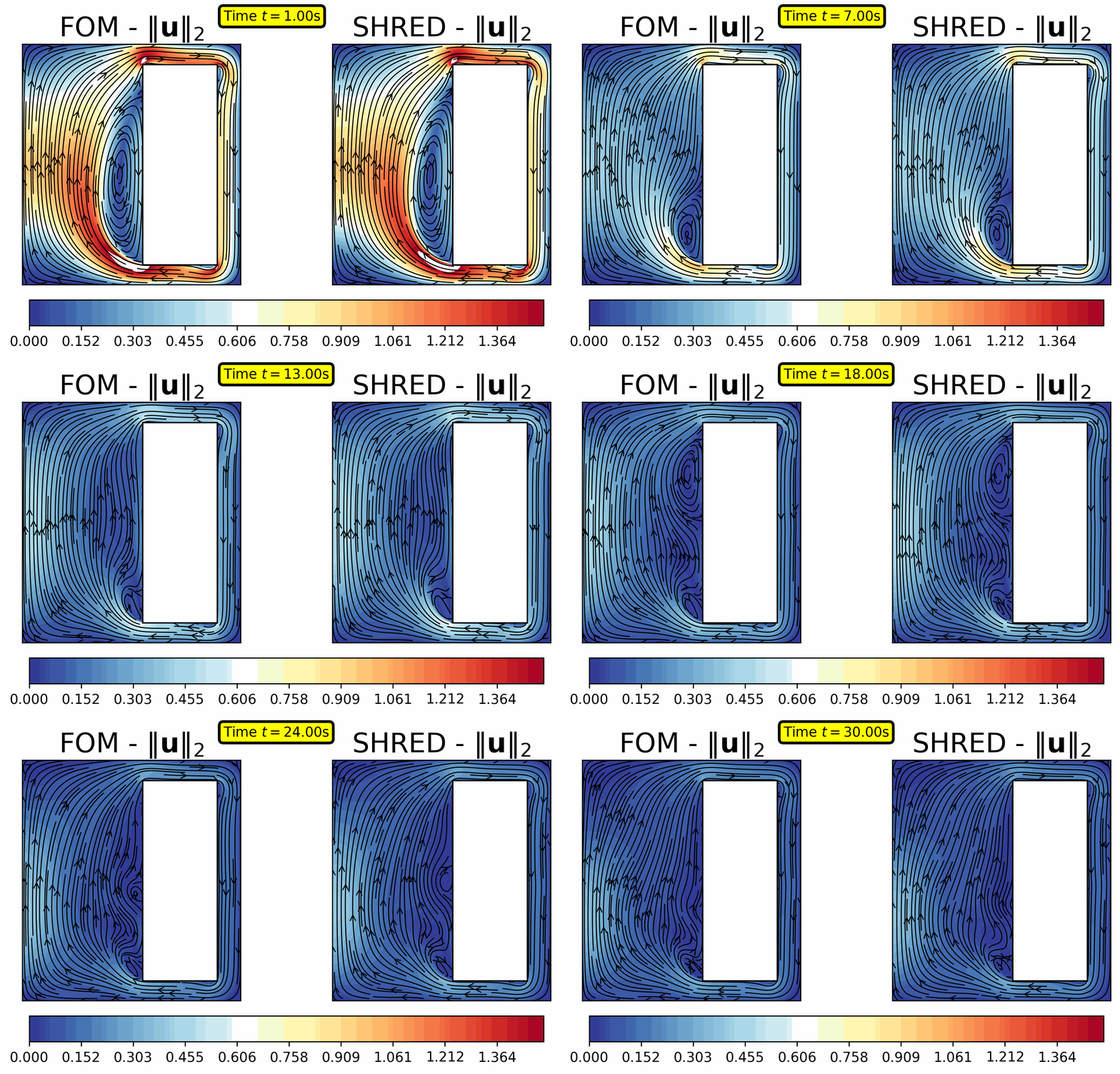
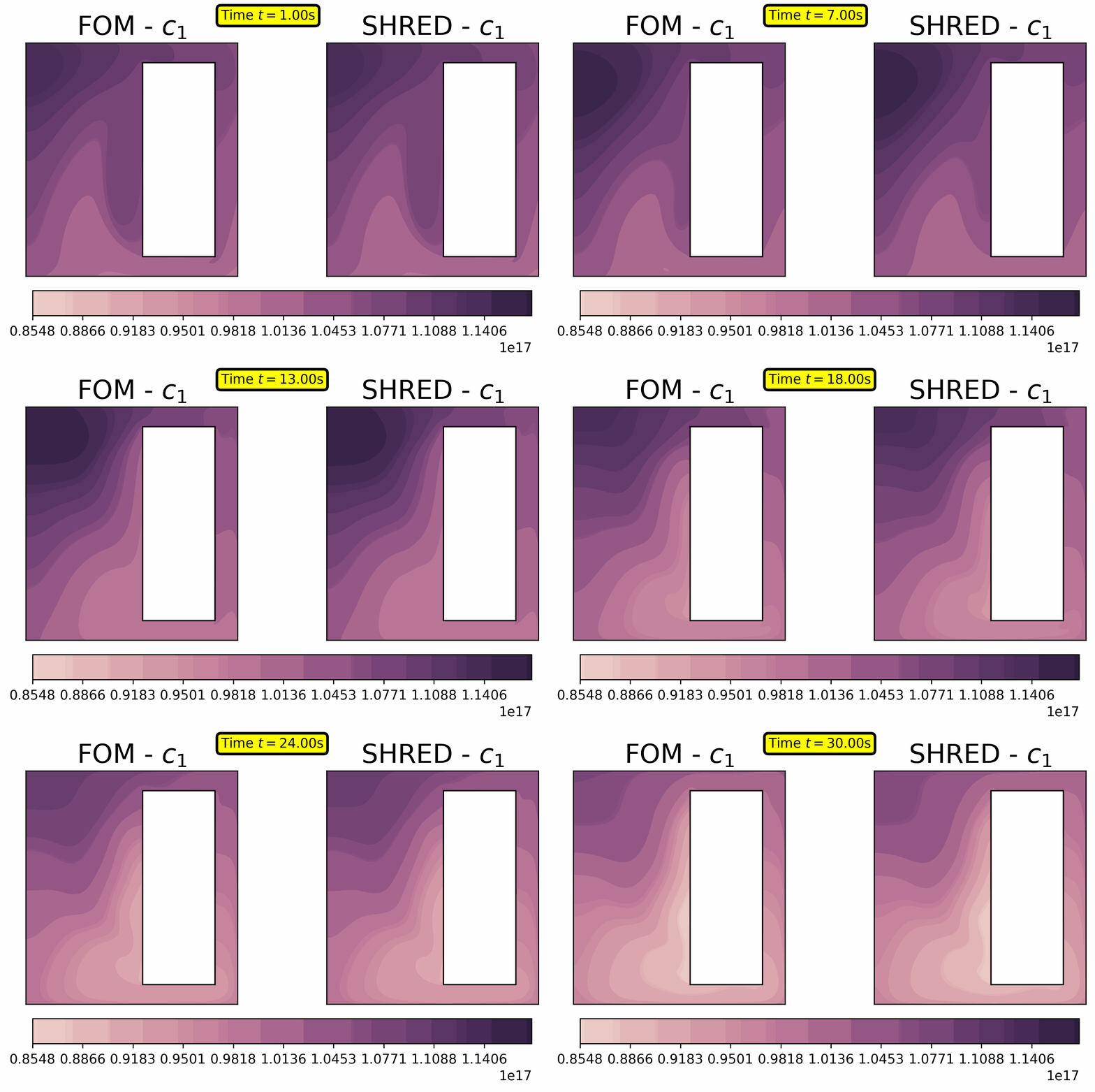
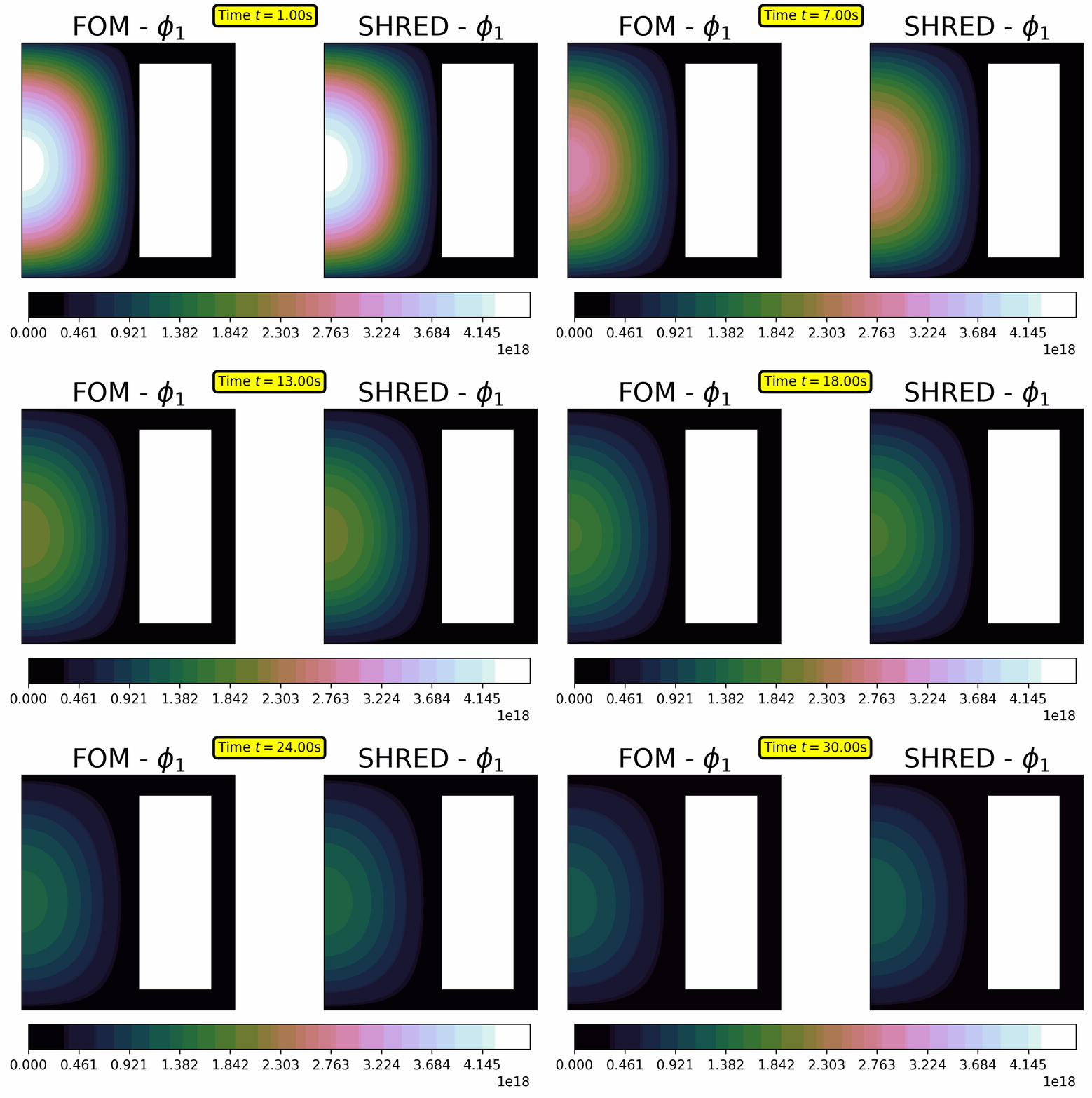
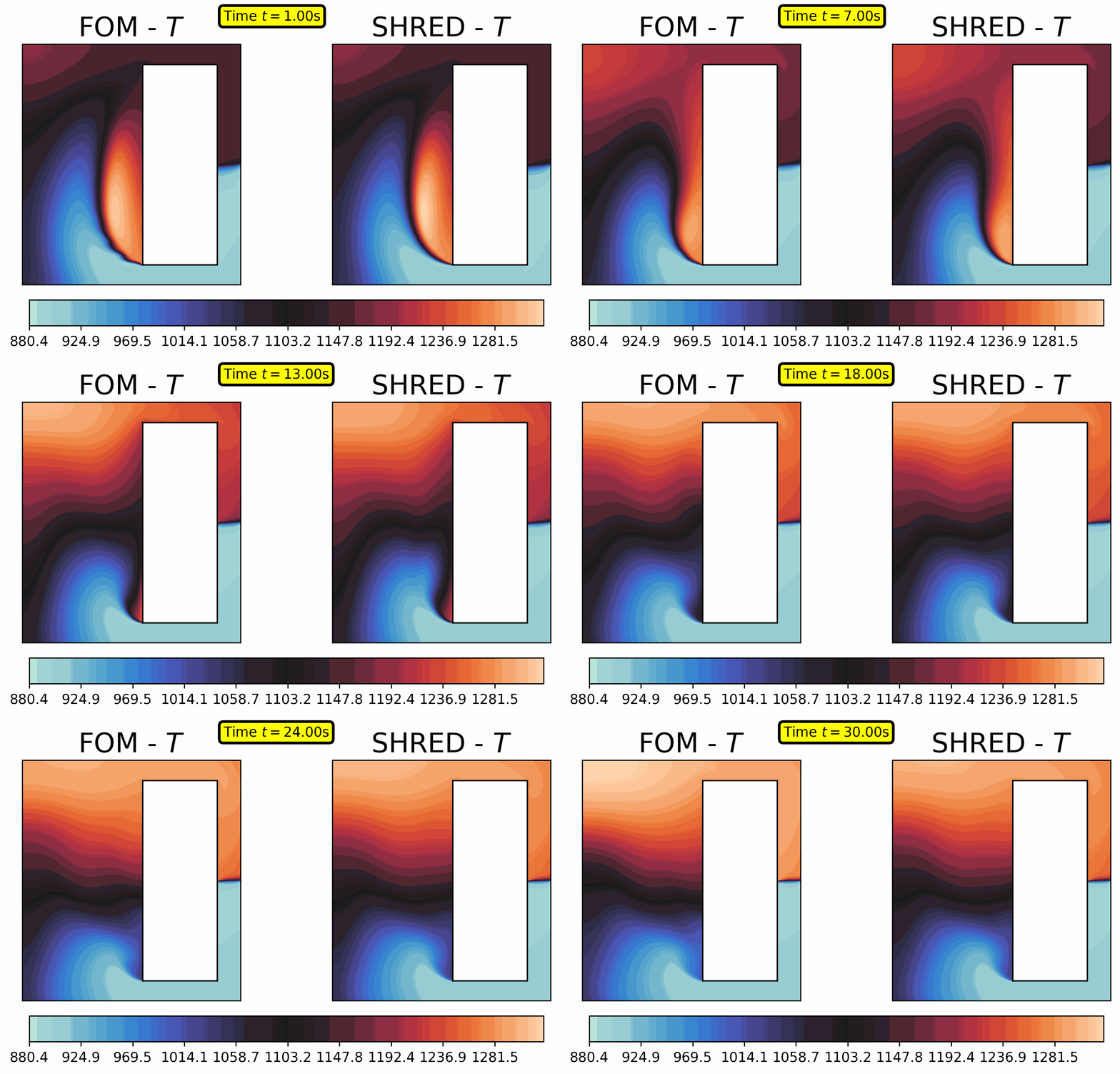
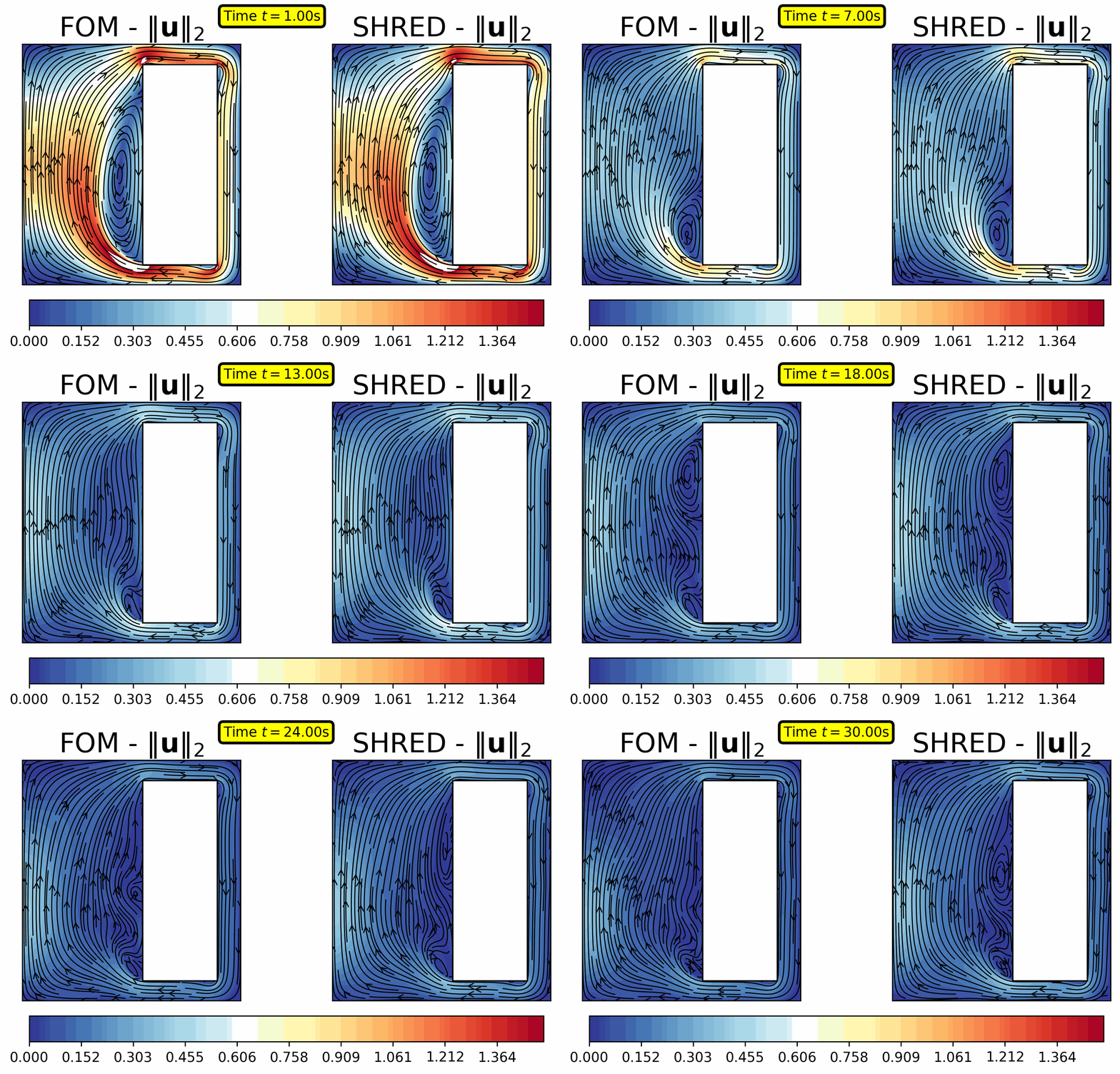
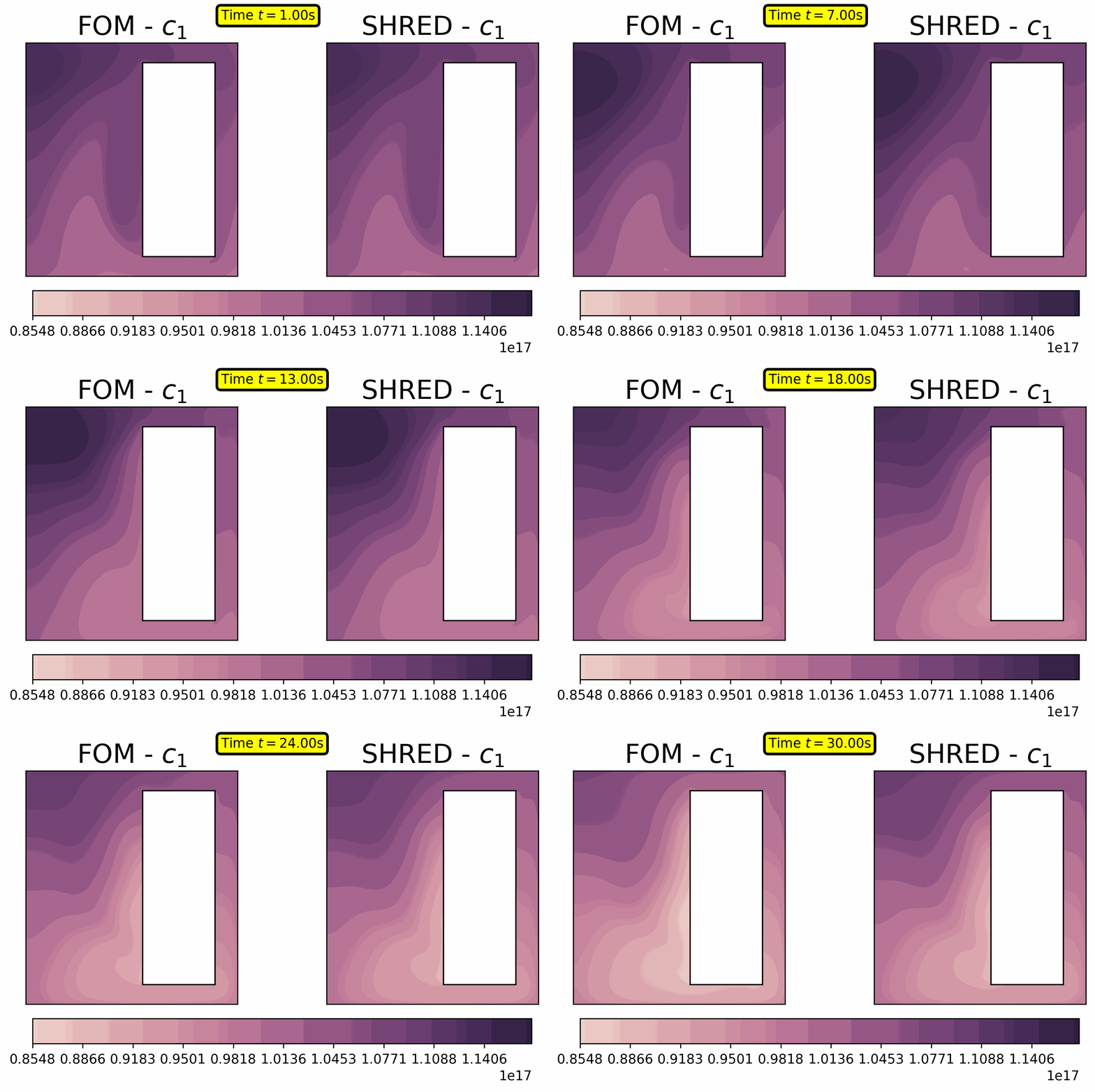
📌 Paper 2
Out-Core Sensing (Fast Flux)
| Fast Flux ϕ1 | Temperature T | Velocity u | Precursors Group 1 c1 |
|---|---|---|---|
 |
 |
 |
 |
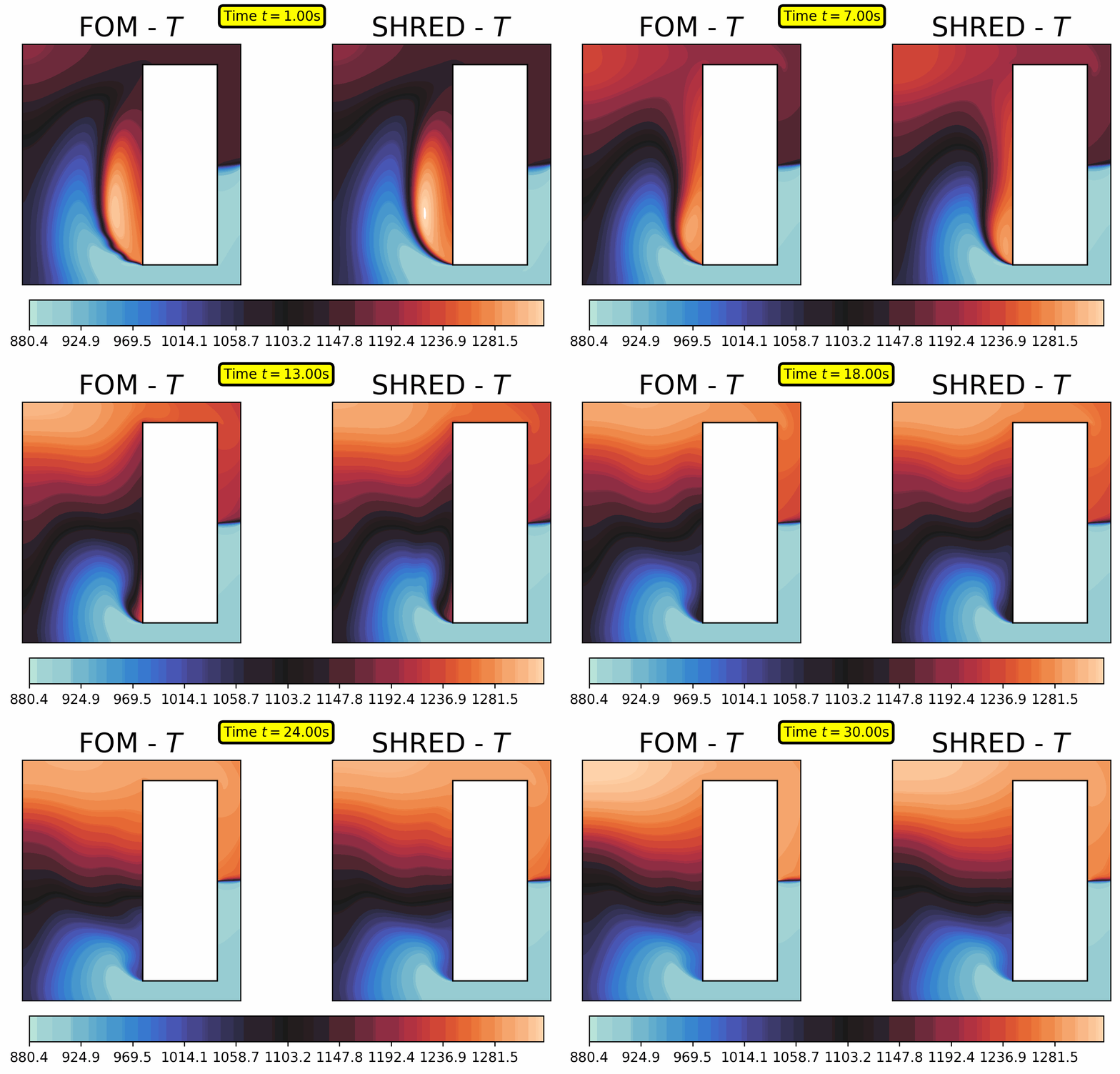
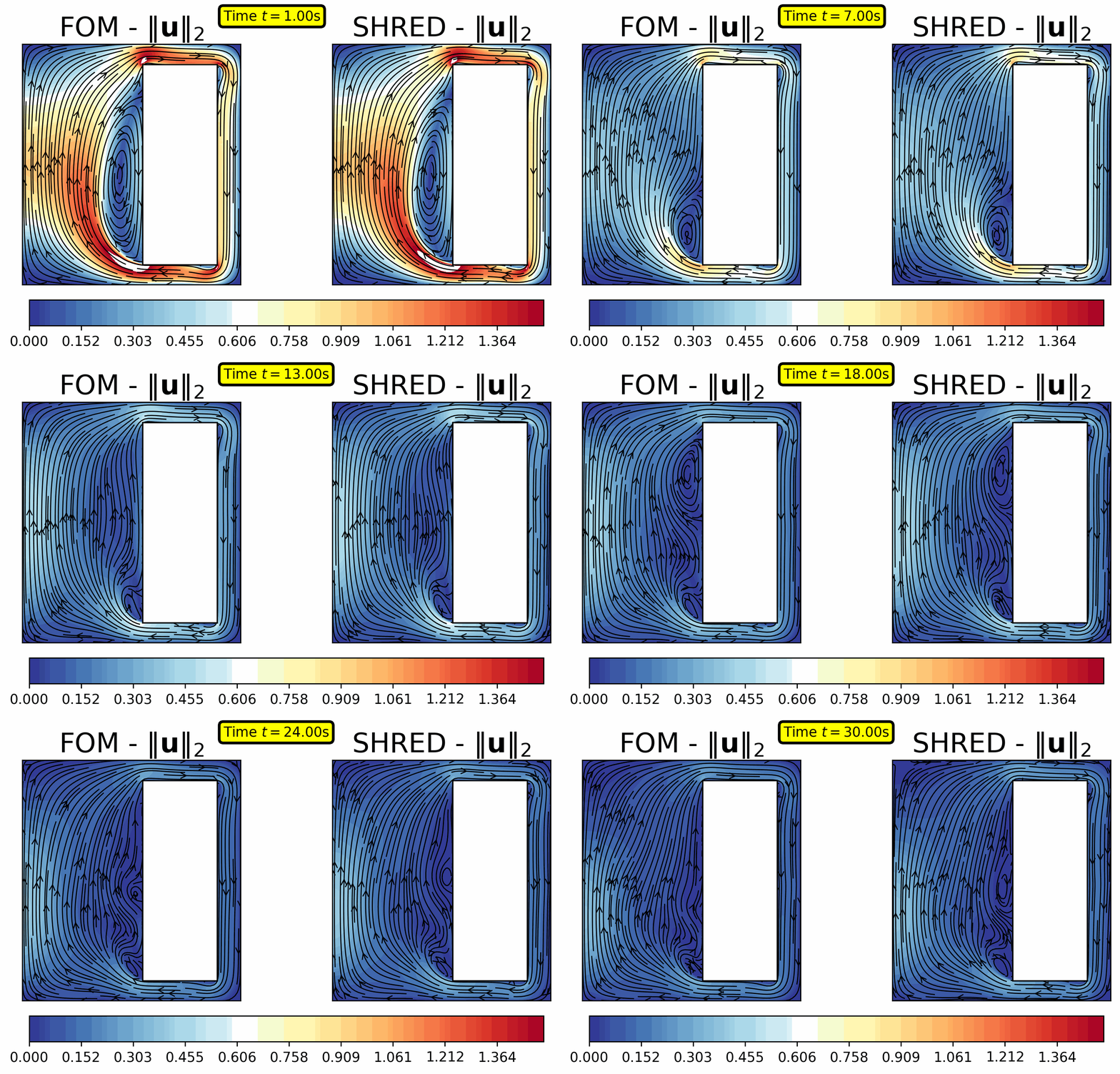
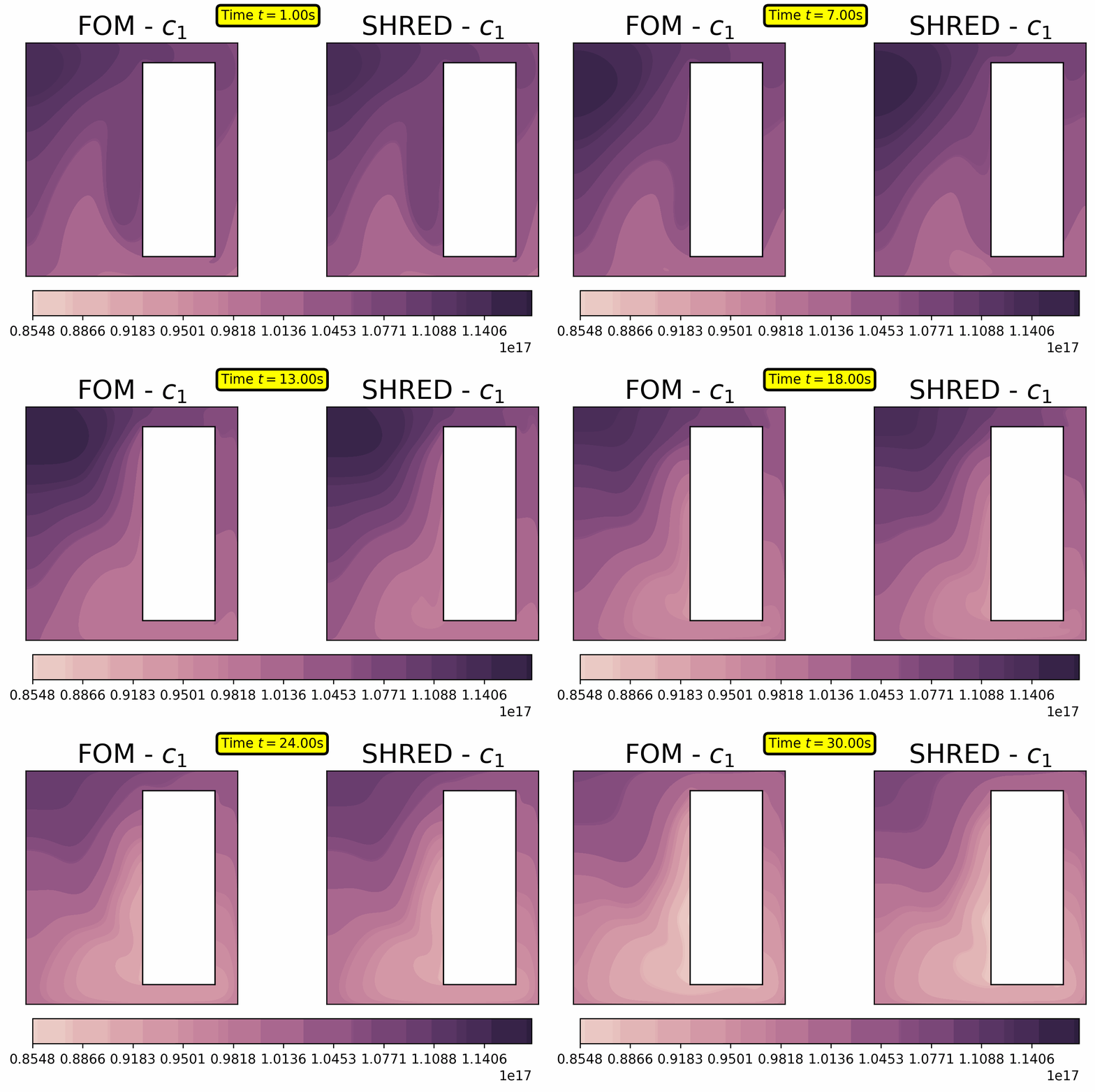
Mobile Sensors (First Group of Precursors)
| Fast Flux ϕ1 | Temperature T | Velocity u | Precursors Group 1 c1 |
|---|---|---|---|
 |
 |
 |
 |
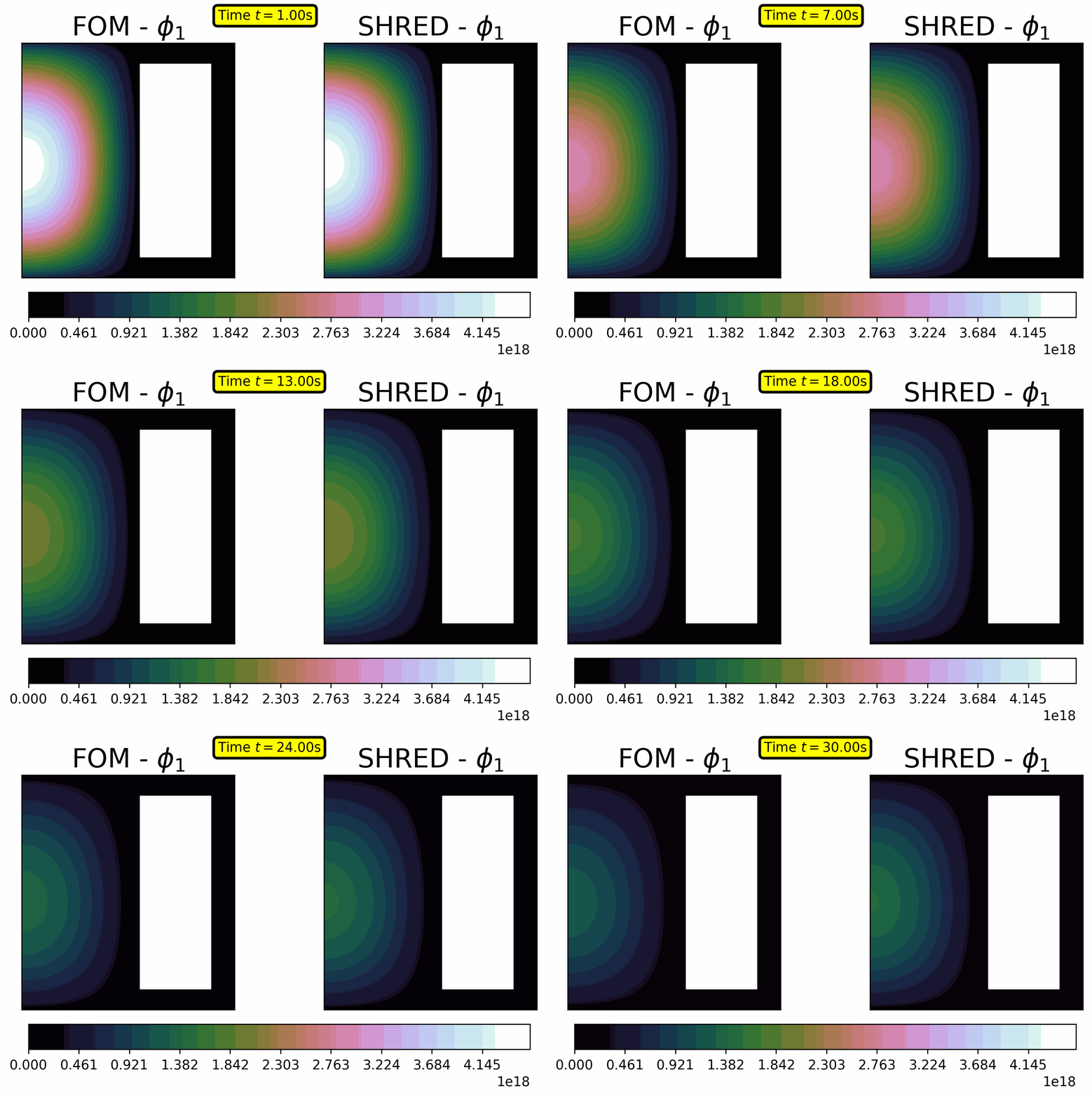
Mobile Probes (only position measured)
| Fast Flux ϕ1 | Temperature T | Velocity u | Precursors Group 1 c1 |
|---|---|---|---|
 |
 |
 |
 |
📌 Paper 3
| Case | Visualization |
|---|---|
| Parametric Verification | 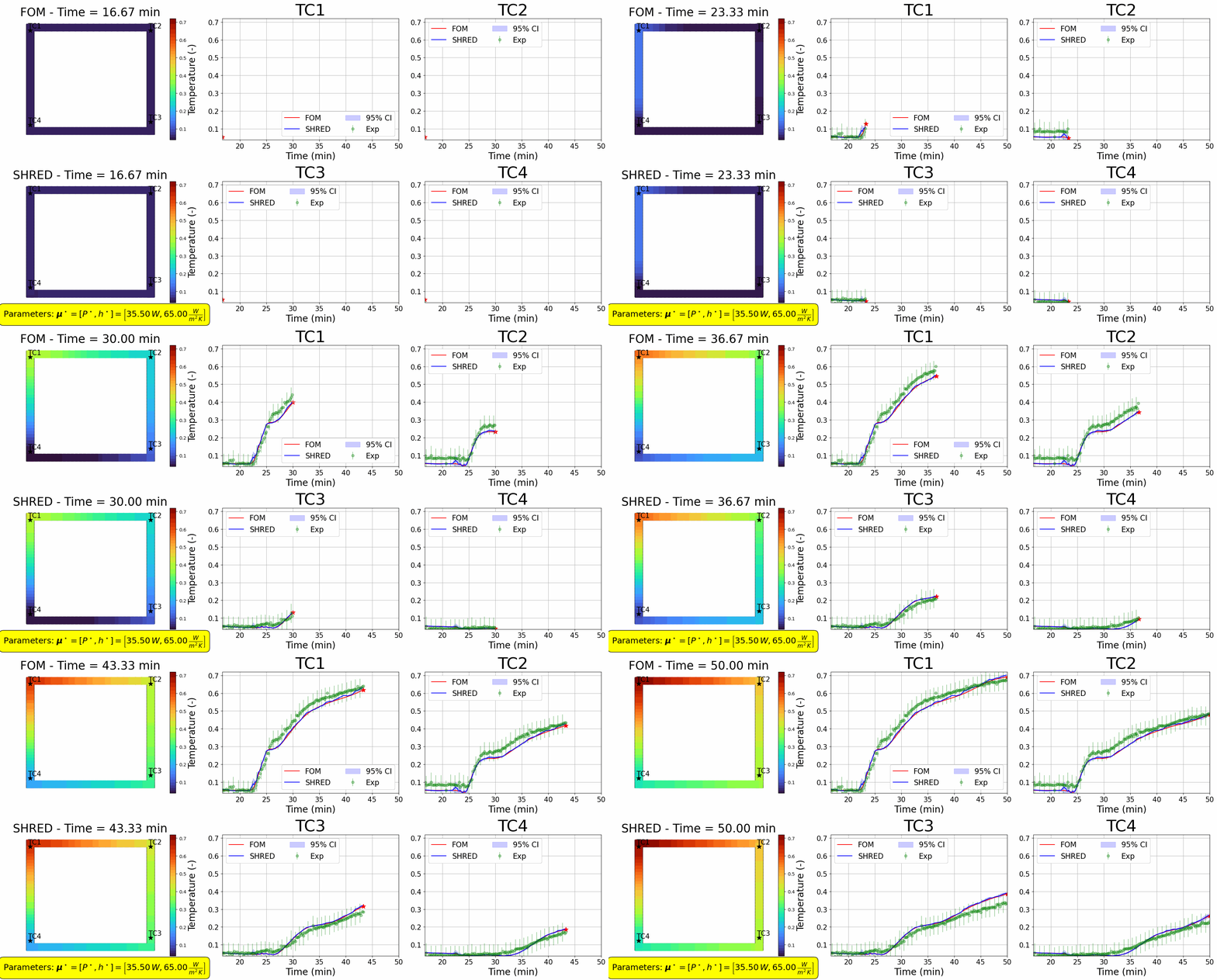 |
| Parametric Validation | 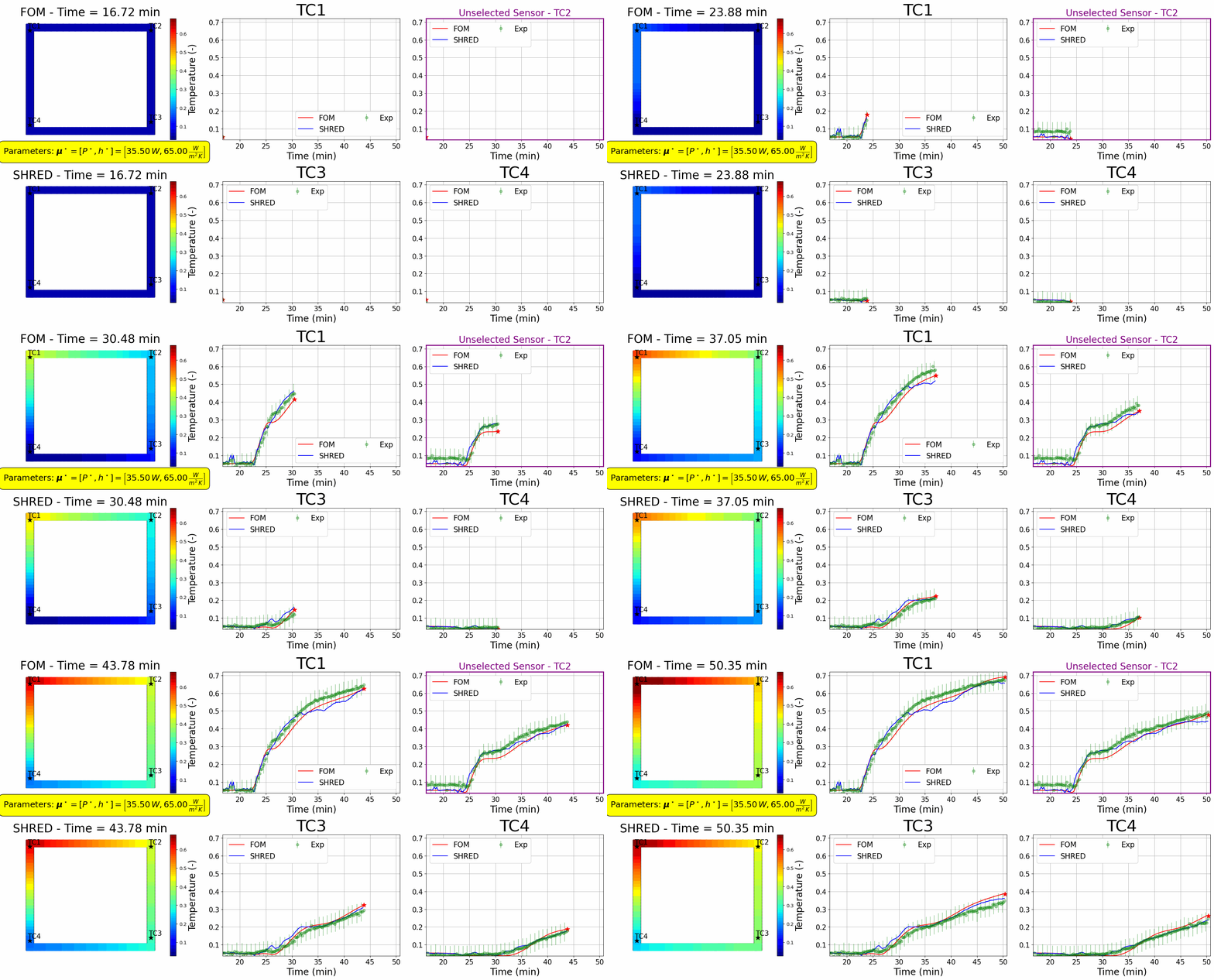 |
| Prediction Validation |  |
📌 Paper 4
| Temperature T | Velocity u |
|---|---|
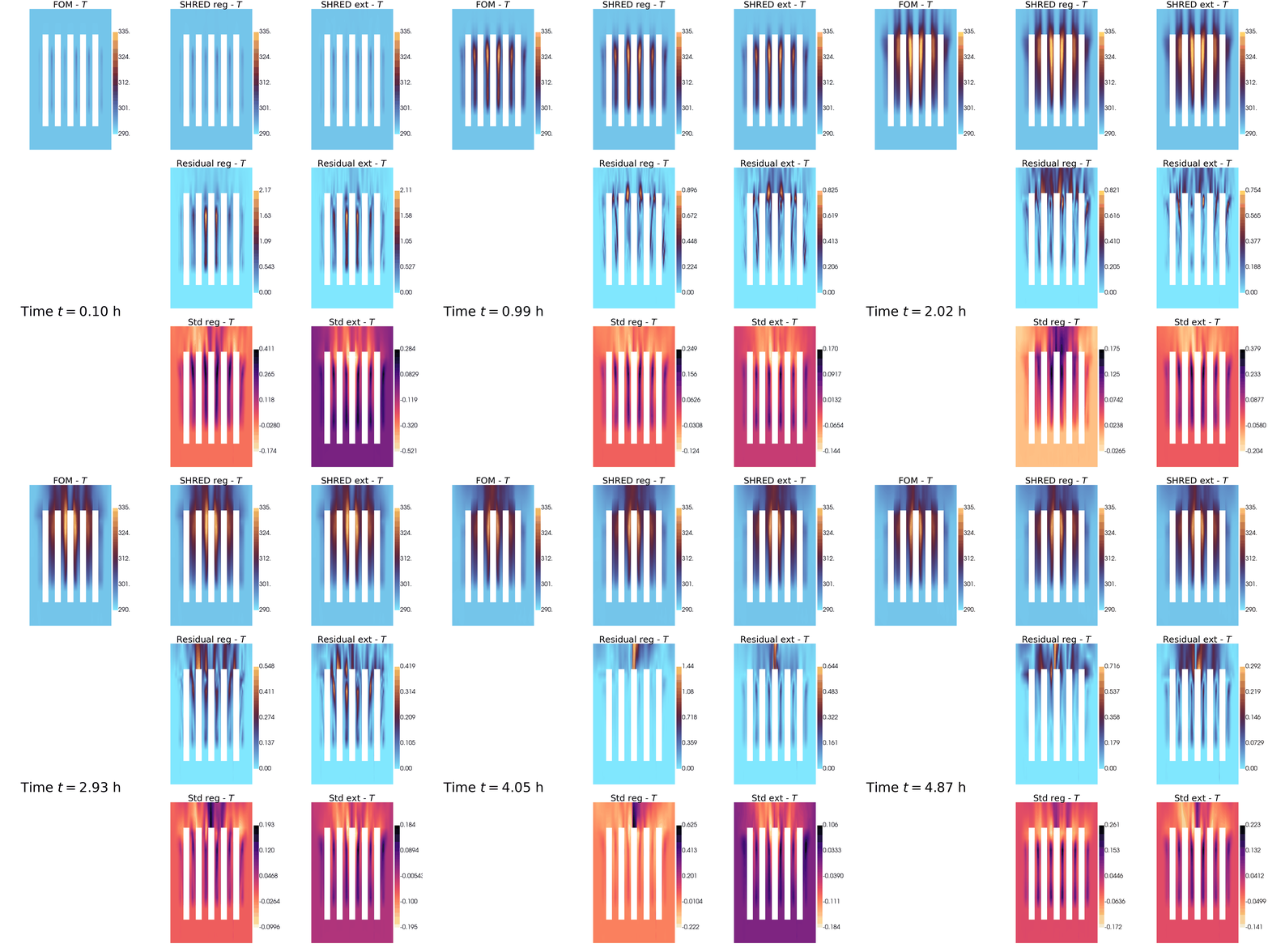 |
 |
📌 Paper 5
| Neutronics |
|---|
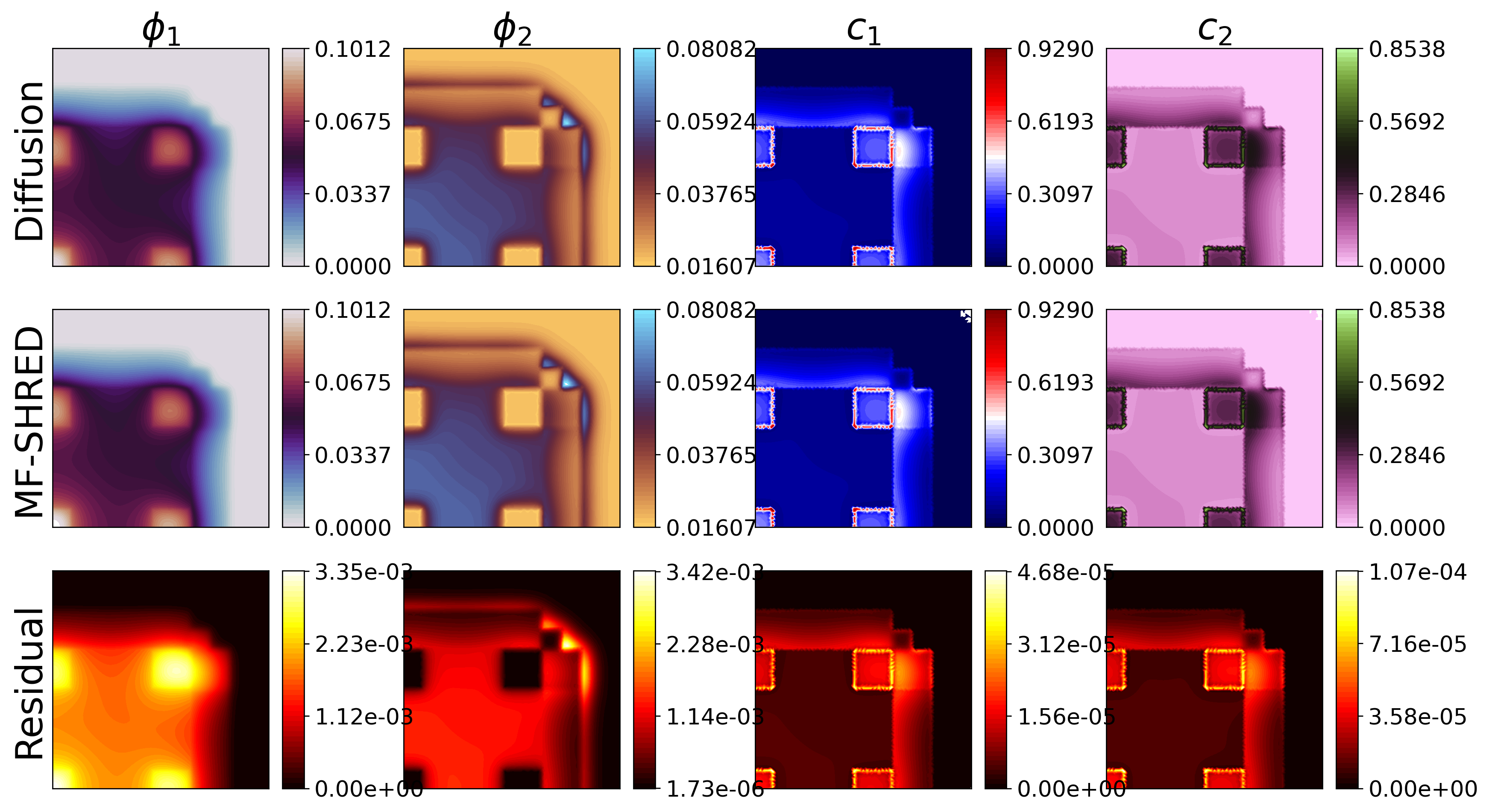 |
| Reaction Diffusion Advection |
|---|
 |